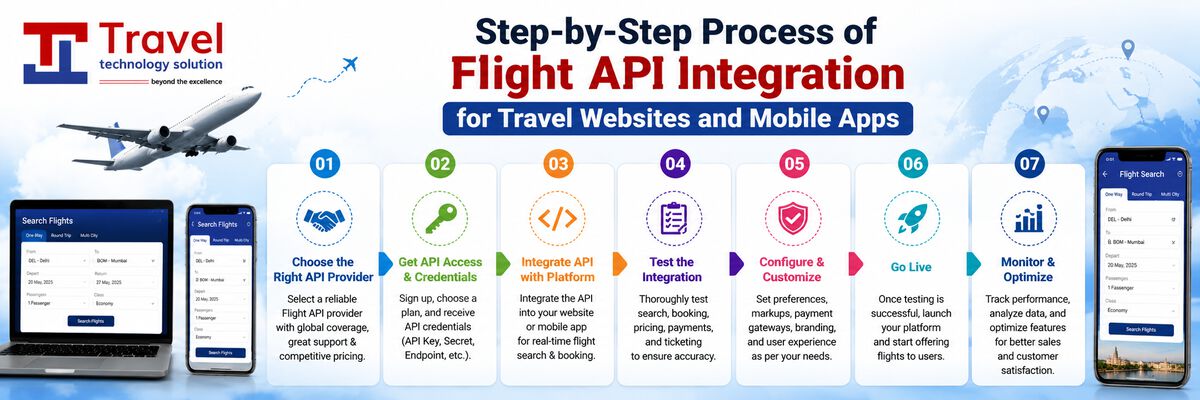
The travel industry has undergone a massive digital transformation in recent years. Travelers now expect instant flight searches, real-time pricing, secure online bookings, and seamless payment options—all from a single platform. To meet these expectations, travel agencies, Online Travel Agencies (OTAs), airlines, and travel technology companies rely on Flight API Integration.
Flight API Integration enables travel businesses to connect their websites or mobile applications with airline systems, Global Distribution Systems (GDS), and third-party travel suppliers. This allows users to search, compare, book, and manage flights in real time.
Whether you're launching a travel startup or expanding an existing OTA, Flight API Integration is the foundation of a successful online flight booking platform.
What is Flight API Integration?
A Flight API (Application Programming Interface) is a software interface that connects your travel website or mobile application with airline databases and booking systems.
It provides access to:
- Real-time flight schedules
- Live airfare pricing
- Seat availability
- Airline information
- Airport details
- Fare rules
- Baggage information
- Booking confirmation
- Ticket issuance
- Flight cancellation and modification
Instead of manually updating flight information, APIs automatically retrieve and display the latest data from multiple airlines and travel suppliers.
How Does Flight API Integration Work?
Flight API Integration acts as a bridge between your booking platform and airline reservation systems.
Step 1: Customer Searches for Flights
A traveler enters:
- Departure city
- Destination
- Travel dates
- Number of passengers
- Cabin class
Step 2: API Sends Request
Your website sends the request to connected airline APIs or Global Distribution Systems (GDS).
Step 3: Flight Data Retrieval
The API collects:
- Available flights
- Fare options
- Flight duration
- Airline details
- Layovers
- Seat availability
Step 4: Results Display
The customer receives real-time search results from multiple airlines within seconds.
Step 5: Booking Confirmation
Once the traveler selects a flight:
- Passenger details are submitted.
- Payment is processed securely.
- Ticket is generated instantly.
- Confirmation email and itinerary are sent automatically.
Types of Flight APIs
1. Airline APIs
These APIs connect directly with airline reservation systems.
Advantages
- Direct inventory
- Competitive pricing
- Faster booking confirmation
Examples include APIs offered by individual airlines.
2. Global Distribution System (GDS) APIs
GDS platforms aggregate flight inventory from hundreds of airlines.
Popular GDS providers include:
- Amadeus
- Sabre
- Travelport
These are ideal for travel agencies that require access to multiple airlines through one integration.
3. Aggregator APIs
Aggregator APIs combine data from airlines, GDSs, and consolidators into a single interface.
Benefits include:
- Broader inventory
- Easy integration
- Faster implementation
- Global flight coverage
Key Features of Flight API Integration
A modern Flight API typically includes:
Flight Search
Search flights based on routes, travel dates, airline preferences, and cabin class.
Real-Time Fare Availability
Display up-to-date fares and seat availability instantly.
Flight Booking
Enable secure booking with instant ticket generation.
Flight Cancellation
Allow customers to cancel bookings according to airline policies.
Ticket Management
Manage booking changes, reissues, refunds, and cancellations.
Fare Rules
Display cancellation policies, baggage allowances, and fare conditions before booking.
Multi-Currency Support
Accept payments in different currencies for international customers.
Payment Gateway Integration
Integrate with secure payment systems for seamless online transactions.
Booking History
Allow users to view and manage previous and upcoming trips.
Reporting Dashboard
Track bookings, revenue, customer behavior, and business performance.
Benefits of Flight API Integration
Real-Time Flight Information
Provide customers with accurate schedules, fares, and availability.
Faster Booking Process
Reduce booking time from several minutes to just a few clicks.
Increased Revenue
Offer a wider range of airlines and pricing options to attract more customers and increase conversions.
Improved Customer Experience
Deliver a seamless booking journey with instant confirmations and secure payments.
Reduced Manual Work
Automate inventory updates, pricing, and ticket management.
Global Airline Access
Connect with domestic and international airlines through a single platform.
Better Business Scalability
Easily expand your platform by adding new airlines, routes, and travel services.
Industries That Use Flight API Integration
Flight APIs are widely used by:
- Online Travel Agencies (OTAs)
- Travel Agencies
- Corporate Travel Management Companies
- Airlines
- Tour Operators
- Travel Startups
- Travel Portals
- Mobile Travel Apps
Essential Integrations
A complete travel booking platform usually integrates Flight APIs with:
- Hotel Booking APIs
- Bus Booking APIs
- Car Rental APIs
- Holiday Package APIs
- Travel Insurance APIs
- Payment Gateways
- SMS Gateways
- Email Notification Systems
- CRM Solutions
Why Travel Businesses Need Flight API Integration
Without API integration, travel businesses face challenges such as:
- Manual booking processes
- Outdated flight information
- Pricing inconsistencies
- Limited airline inventory
- Higher operational costs
- Increased booking errors
Flight API Integration eliminates these issues by automating the entire booking lifecycle and providing real-time connectivity to airline systems.
Future Trends in Flight API Integration
The future of travel technology is driven by innovation. Emerging trends include:
NDC (New Distribution Capability)
NDC enables airlines to offer personalized fares, ancillary services, and richer content directly to travel sellers.
Artificial Intelligence (AI)
AI-powered search engines recommend the best flights based on customer preferences and travel history.
Dynamic Pricing
Real-time fare optimization helps airlines and agencies offer competitive prices.
Mobile-First Booking
Flight APIs are increasingly optimized for fast, secure mobile booking experiences.
Cloud-Based Travel Platforms
Cloud technology improves scalability, uptime, and global accessibility for travel businesses.
How to Choose the Right Flight API Provider
Before selecting a Flight API provider, consider the following:
- Real-time inventory updates
- Global airline coverage
- Easy API documentation
- Secure payment integration
- Multi-currency and multilingual support
- Fast response time
- High uptime and reliability
- Technical support
- Scalability
- Transparent pricing
A reliable API provider ensures smooth operations and a better customer experience.
Conclusion
Flight API Integration is the backbone of any modern online travel business. It enables travel agencies, OTAs, and travel technology companies to offer real-time flight search, booking, ticketing, and management through a secure and user-friendly platform.
By integrating Flight APIs with GDS providers, airlines, payment gateways, and other travel services, businesses can improve operational efficiency, enhance customer satisfaction, and increase revenue. As the travel industry continues to embrace digital innovation, Flight API Integration will remain a critical investment for businesses looking to stay competitive and grow in the global travel market.
Frequently Asked Questions (FAQs)
1. What is Flight API Integration?
Flight API Integration connects a travel website or mobile app with airline systems and GDS platforms to provide real-time flight search, booking, pricing, and ticket management.
2. Who can use Flight API Integration?
It is suitable for travel agencies, OTAs, airlines, tour operators, corporate travel companies, and travel startups.
3. What are the benefits of Flight API Integration?
Benefits include real-time flight data, automated bookings, faster ticketing, reduced manual work, improved customer experience, and increased business revenue.
4. Which GDS providers support Flight API Integration?
The most popular GDS providers are Amadeus, Sabre, and Travelport, offering access to hundreds of airlines worldwide.
5. Can Flight API Integration be combined with hotel and bus booking APIs?
Yes. Most travel platforms integrate Flight APIs with hotel, bus, car rental, holiday package, travel insurance, and payment gateway APIs to provide a complete travel booking solution.