Travelport gives travel businesses access to airline content, including the Galileo, Apollo and Worldspan systems, through modern APIs. Integrating it into a booking website or B2B portal is a significant project. Most delays come not from coding but from missing agreements, unclear scope or late testing. This guide lists what to plan before development starts.
1. Commercial agreement and credentials
You need an agreement with Travelport, or with a Travelport partner, to receive API credentials for test and production environments. Clarify early:
- Which content you will access, such as airlines, NDC content or ancillaries.
- The commercial terms, including any segment fees or incentives.
- Who your account contact is for technical questions.
2. Ticketing authority
Booking a flight is not the same as issuing a ticket. To issue tickets, you need ticketing authority, typically through IATA accreditation, or an arrangement with a consolidator who tickets on your behalf. Decide this before development, because it affects how the ticketing step is built.
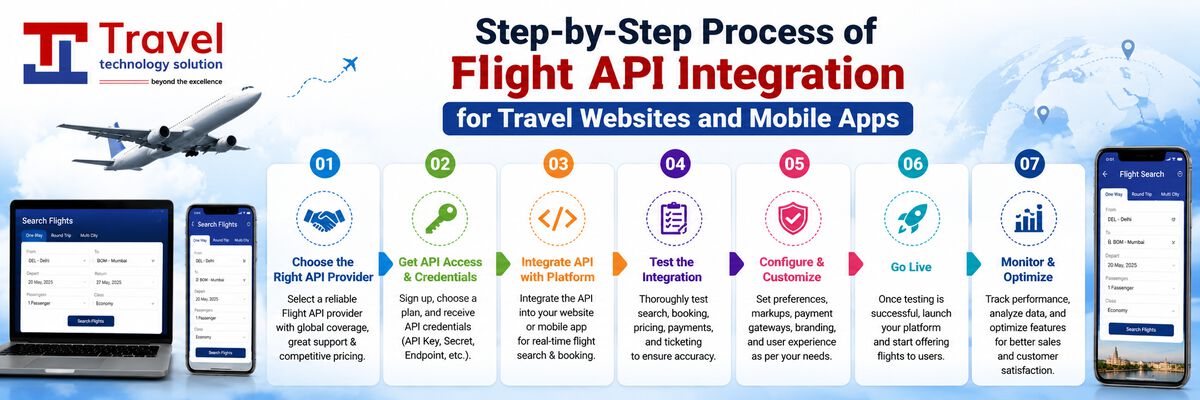
3. Scope of flows
List exactly which functions you need in the first release:
- Search and pricing for one-way, return and multi-city.
- Fare rules and baggage display.
- Booking (PNR creation) and ticketing.
- Seat maps and ancillaries.
- Cancellations, voids, refunds and reissues.
- Queue reading for schedule changes.
Starting with the core flows and adding ancillaries and automated reissues later is a common, lower-risk approach.
4. Data mapping
Travelport's responses must be converted into your booking engine's common data model alongside other suppliers. Plan how you will handle airlines, airports, fare families, baggage and taxes so results look consistent to the traveller regardless of source.
5. Certification and testing
Many GDS integrations require certification, where the provider reviews your booking flows before granting production access. Build time for this into your plan, and prepare test cases covering domestic and international trips, different passenger types, failures and cancellations.
6. Monitoring after launch
- Log every request and response, with sensitive data masked.
- Track error rates and response times.
- Alert the team when ticketing fails or a supplier is slow.
7. Realistic timeline
A typical Travelport integration takes several weeks, depending on scope, certification and how quickly agreements and credentials are in place. Ancillaries, NDC content and automated after-sales add time. Ask your development partner for a phased plan with clear milestones.
In practice: a phased rollout
An agency planning a new B2C site agrees with its developer to launch in two phases. Phase one covers search, pricing, booking and ticketing for one-way and return trips, plus cancellation requests handled by the operations team. Phase two, a few weeks after launch, adds seat maps, extra baggage, multi-city search and automated refunds. The agency starts selling sooner, real bookings reveal what customers use most, and phase two is shaped by that data instead of guesses.
Documents to prepare for your developer
- Your agreement details and the list of content and features it covers.
- Test and production credentials, and the office or account identifiers they belong to.
- Your markup and pricing rules for flights.
- Your refund, cancellation and change policies, so after-sales flows match them.
- Email and voucher templates with your branding.
- Contacts at Travelport or your partner for certification and support.
Handing these over at the start lets the developer build the right flows the first time and avoids weeks of back-and-forth during testing.
Frequently asked questions
Do I need separate integrations for Galileo and Worldspan?
Generally no. Travelport's APIs provide access to its systems through one integration, though configuration depends on your agreement.
Can Travelport be combined with other suppliers?
Yes. Most booking engines combine a GDS with low-cost carrier APIs and aggregators for wider coverage.
Key takeaways
- Secure agreements, credentials and ticketing authority first.
- Define a clear first-release scope and phase the rest.
- Plan for certification, testing and monitoring from the start.
Ready to connect Travelport? Learn about our Travelport API integration service.