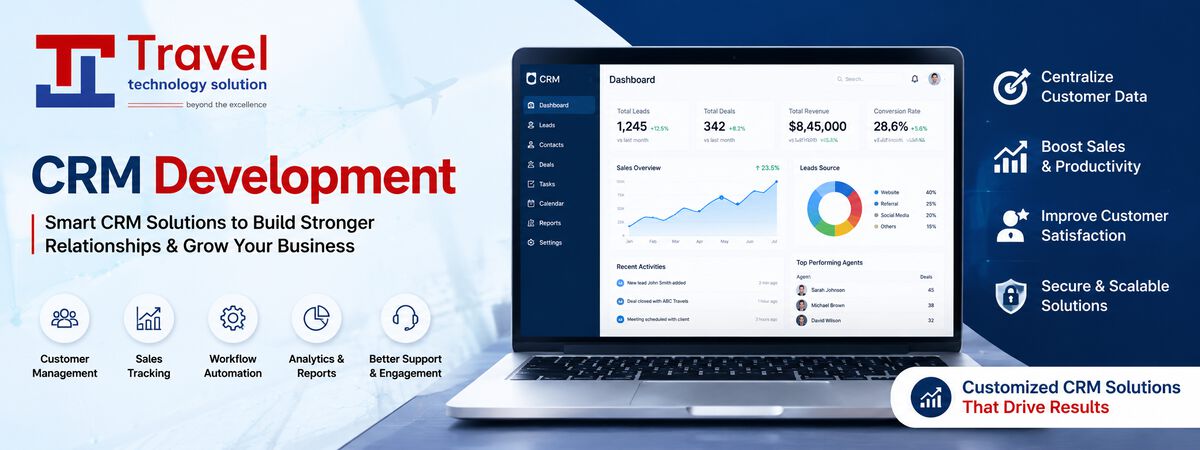
A travel CRM is different from a generic sales CRM because travel sales involve itineraries, suppliers, travellers and payment schedules. Whether you are building a CRM from scratch or customising an existing one, these are the features travel agencies and DMCs actually use every day.
Lead capture and assignment
- Leads from website forms, WhatsApp, email, phone and social media in one inbox.
- Lead source tracking for marketing reports.
- Automatic assignment by destination, trip type or workload.
- Duplicate detection by phone and email.
Itinerary and quotation builder
This is the heart of a travel CRM:
- Day-by-day itineraries with hotels, transfers, activities and meals.
- Reusable templates and content blocks.
- Automatic pricing from stored supplier rates with markups.
- Multiple options, such as standard and premium.
- Branded PDF and web itineraries sent by email or WhatsApp.
Supplier and rate management
- Hotels, transport and activity suppliers with contacts.
- Seasonal rates, meal plans and child policies.
- Supplier confirmation tracking per booking.
Traveller profiles
- Contact details, passports and preferences.
- Family members and frequent co-travellers.
- Trip history and feedback.
Booking conversion
When a quote is accepted, it becomes a booking with traveller details, services, supplier confirmations and payment schedule. Operations work from the same record, so nothing is retyped.
Payments
- Payment links for deposits and balances.
- Payment schedules with reminders.
- Receipts and invoices.
Communication
- WhatsApp and email integration with conversation history.
- Templates for follow-ups, reminders and pre-departure information.
- Internal notes and mentions between team members.
Reports
- Leads, conversion and revenue by source and salesperson.
- Pipeline value by stage.
- Lost reasons and response times.
- Bookings and margin by destination.
Integrations
Connect the CRM to your booking engine for live flight and hotel prices, to accounting for invoices, and to your website for lead capture. Integration is often what makes a custom or customised CRM worth the investment.
In practice: the quote builder pays for itself
A DMC's sales team spent an hour or more preparing each detailed quote in a word processor. After moving to a CRM with stored rates and itinerary templates, most quotes took minutes. Faster quotes meant faster replies, and the team handled more enquiries without adding staff.
Common mistakes
- Building a generic sales CRM without itineraries or supplier rates.
- No WhatsApp integration, so conversations stay outside the CRM.
- Skipping the handover from sales to operations.
Phasing CRM development
Start with lead capture, assignment, follow-ups and the quote builder, since these drive revenue directly. Add booking conversion, payments and supplier confirmations next, then advanced reports and automation. Each phase delivers value and gives users time to adopt the system before more is added.
Making adoption easy
Involve salespeople in design, keep screens simple, and migrate existing leads and customers before launch. A CRM that saves staff time from the first week is adopted quickly; one that adds data entry is avoided.
Frequently asked questions
Should we build or customise?
Customising an existing travel CRM is usually faster and cheaper; build only if your processes are truly unique.
Can the CRM work for B2B agents too?
Yes. Agents can have logins to request quotes and track their bookings.
Data migration
Before launch, import existing customers, open leads and supplier rates from spreadsheets or old systems. Clean duplicates and standardise phone numbers and destinations during the import. Starting with good data makes reports trustworthy from day one and convinces the team that the CRM is the single source of truth.
Key takeaways
- The itinerary and quote builder is the most valuable travel CRM feature.
- Store supplier rates, traveller profiles and payments in one place.
- Integrations with booking, accounting and WhatsApp multiply the value.
See our ready-to-customise travel CRM.