"Flight booking website" can mean very different products. A consumer travel site, a portal for travel agents and a corporate booking tool may use the same flight APIs, but they serve different users and need different features. Choosing the right type, or the right combination, is the first decision in any flight technology project.
1. B2C flight booking website (OTA)
A B2C site sells directly to travellers.
- Users: the general public.
- Must-have features: fast search, clear results, fare families, seat selection, simple checkout, multiple payment methods, customer accounts and self-service cancellations.
- Revenue: markups, service fees, ancillaries and supplier commissions.
- Main challenge: attracting traffic and converting it, which means strong design, SEO and marketing.
2. B2B agent portal
A B2B portal lets travel agents book flights from a consolidator or wholesaler.
- Users: registered travel agents and their staff.
- Must-have features: agent registration and approval, wallet or deposit balance, credit limits, agent-specific markups and commissions, invoices and ledgers.
- Revenue: margins on volume and service fees.
- Main challenge: credit control and fast after-sales support for agents.
3. Corporate booking tool
A corporate self booking tool lets employees book business travel within company rules.
- Users: employees, travel managers and approvers.
- Must-have features: travel policies by grade, approval workflows, preferred airlines, corporate fares, cost centres and spend reports.
- Revenue: transaction fees or management fees paid by the company.
- Main challenge: balancing policy compliance with an easy booking experience.
4. Series fare and fixed departure portal
Some agencies buy blocks of seats in advance on popular routes and resell them. A series fare portal manages this inventory.
- Users: agents and sometimes direct customers.
- Must-have features: inventory upload, seat counts per flight, pricing, PNR and name list management, and release of unsold seats.
- Revenue: the difference between purchase and sale price.
- Main challenge: selling seats before the airline's name-submission deadline.
Combining types on one platform
Many businesses run more than one model. A consolidator may operate a B2B portal for agents and a B2C site for direct customers, both on the same booking engine. Sharing one engine keeps supplier connections, pricing rules and reports in one place, while each channel gets its own interface and rules.
How to choose
- Who are your customers today: travellers, agents or companies?
- Do you hold your own inventory, such as series fares?
- Do you have the marketing budget a B2C site needs?
- Do you plan to add other channels within the next year?
Features every type needs
Whatever model you choose, some foundations are common to all flight booking websites:
- Reliable supplier connections with fare revalidation before payment.
- A pricing engine for markups, discounts and fees.
- Booking queues and alerts for failed or pending tickets.
- Cancellation and refund tracking.
- Reports for sales, margins and supplier reconciliation.
Frequently asked questions
Can a B2B portal also serve walk-in customers?
Yes. Agents can book for their own customers and print tickets with their branding and markup, which effectively turns your B2B portal into their storefront.
Is a corporate booking tool only for large companies?
No. Travel management companies often provide one platform to many small and mid-sized corporate clients, each with its own policies and approvers.
Do series fare portals need a GDS connection?
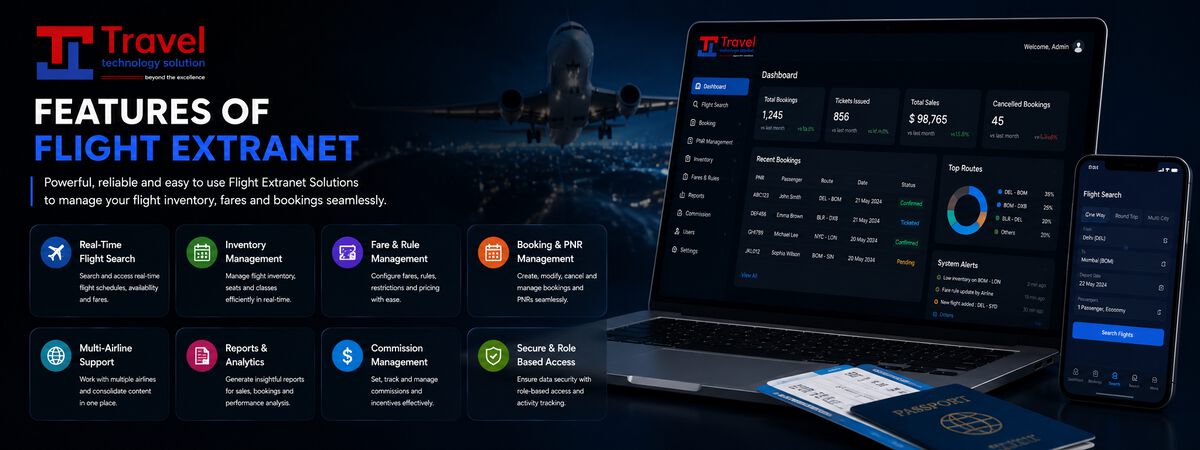
Not always. Series inventory is often uploaded manually or through an extranet, though many portals combine it with GDS content so agents see everything in one search.
Example: one consolidator, three channels
Consider a consolidator in India with a network of agents. Its main business runs through a B2B portal where agents book on prepaid wallets. It also holds series fares to Gulf destinations during peak months, managed in a series fare module inside the same portal. Later it launches a B2C website using the same booking engine and supplier connections, with separate pricing for direct customers. Because all three channels share one engine, the operations team manages queues, refunds and reconciliation in one place, and management sees combined reports across channels.
This kind of growth path, starting with the channel you know best and adding others on the same platform, is usually lower risk than building every channel at once.
Key takeaways
- B2C sites compete on experience and marketing; B2B portals compete on rates, credit and service.
- Corporate tools are built around policy and approvals.
- Series fare portals manage inventory you have already paid for.
- One shared booking engine can power several channels.
Not sure which model fits your business? Read more about our flight booking website development or compare plans and pricing.