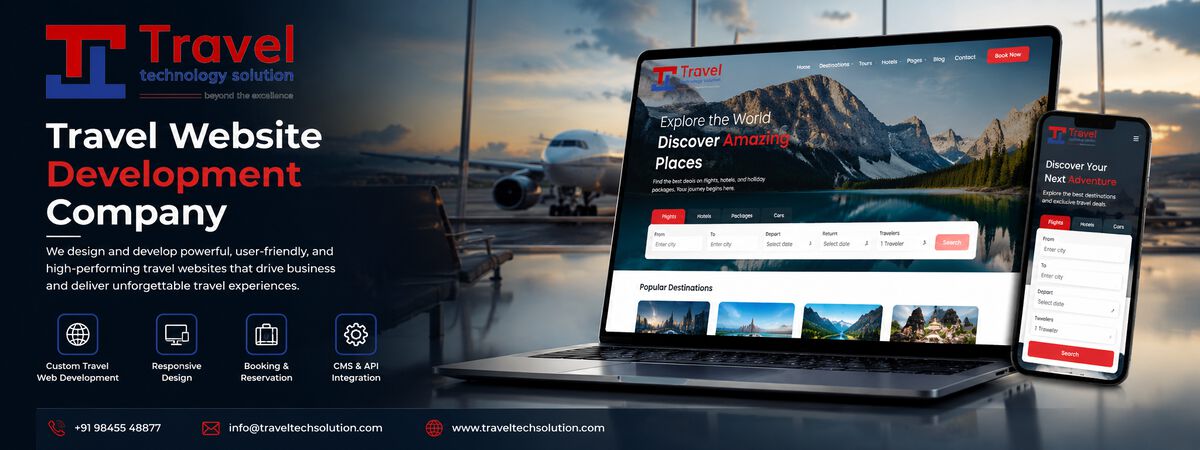
For most tour and travel agencies, the website is the first impression. Travellers compare several agencies online before they call or book, and they judge quickly: does this company look trustworthy, does it offer what I want, and is it easy to contact? This guide lists the pages and features a tour and travel agency website needs to turn visitors into enquiries and bookings.
Essential pages
Home page
State clearly who you are and what you offer: for example, "Kerala and South India tour packages for families and couples". Show your best packages, key destinations, a search or enquiry box, and trust signals such as reviews and years in business.
Destination pages
One page per destination with an overview, best time to visit, top experiences, sample itineraries and related packages. These pages attract search traffic from people researching trips.
Package pages
Each package needs a clear name, duration, price or "from" price, day-by-day itinerary, inclusions and exclusions, hotel options, photos, cancellation terms and an obvious enquiry or booking button.
About us
Your story, team, office address, registrations and memberships. Real photos of your team and office build trust.
Contact page
Phone, WhatsApp, email, office address with a map and working hours. Make contacting you effortless.
Policies
Terms, privacy, payment and cancellation policies, written clearly.
Features that drive enquiries and bookings
- Smart enquiry forms that ask for dates, travellers, budget and destination, without being too long.
- WhatsApp and click-to-call buttons visible on mobile.
- Online booking and payment for fixed packages, or a deposit to confirm.
- Package filters by destination, duration, budget and theme.
- Customise this trip option that turns a package into a tailored enquiry.
- Live flight and hotel search, if you sell those products.
Trust signals
- Genuine reviews, ideally from independent platforms.
- Real trip photos and short traveller stories.
- Registrations and memberships you hold, with verifiable details.
- Secure payment logos only for gateways you actually use.
- Fast, polite responses to every enquiry.
Content and SEO
- Unique descriptions for every destination and package, not copied from suppliers.
- Helpful guides answering real questions: visas, weather, budgets, what to pack.
- Clean URLs, descriptive page titles and fast loading.
- A Google Business Profile linked to your website for local searches.
Mobile-first design
Most travel research happens on phones. Test every page on a mid-range phone: text should be readable without zooming, buttons easy to tap, images compressed and forms short. A sticky WhatsApp or call button at the bottom of the screen often produces more enquiries than any form.
Speed and technical basics
- Compress and resize photos; travel sites are image-heavy and slow images lose visitors.
- Use a reliable host and HTTPS on every page.
- Add an XML sitemap and submit it to Google Search Console and Bing Webmaster Tools.
- Track enquiries and bookings in analytics so you know which pages and campaigns work.
Admin and CRM
Behind the website, the team needs an easy way to update packages, prices, offers and photos without a developer, and a CRM or enquiry inbox that records every lead with its source. Without this, the website goes out of date and enquiries are missed.
In practice: from brochure site to lead engine
A family-run agency had a five-page website with a phone number and no package details. Enquiries came only from referrals. It rebuilt the site with destination pages, detailed packages, a short enquiry form and a WhatsApp button, and added a simple CRM. Within months, a steady share of its enquiries came from the website, mostly from people who had read its destination guides first.
Keep it fresh
Update packages and prices every season, add new trip photos and reviews regularly, and publish a new guide or destination page each month. Fresh, accurate content keeps visitors returning and signals to search engines that the site is active.
Common mistakes
- Listing packages without prices or inclusions.
- Copying supplier descriptions, which hurts SEO and trust.
- Long forms that discourage enquiries on mobile.
- Slow responses that waste the leads the website produces.
Frequently asked questions
Do we need online payment?
For fixed packages and day tours, yes. For tailor-made trips, an enquiry and quote process may suit better, with payment links sent later.
How many destination pages should we start with?
Start with the destinations you sell most, and write them well. Add more over time.
Key takeaways
- Clear destination and package pages are the core of a tour website.
- Make enquiries and WhatsApp contact effortless on mobile.
- Build trust with genuine reviews, real photos and fast responses.
Build a website that brings enquiries with our holiday website development and travel website design services.